6 Critical Steps to Defend Your Enterprise from the Shai-Hulud Worm and npm Vulnerability
The recent Shai-Hulud worm, targeting npm and PyPI ecosystems, has sent shockwaves through the developer community. With 172 compromised packages, 403 malicious versions, and a CVSS score of 9.6, this attack exploits trust in open-source supply chains. The worm persists beyond package removal, steals credentials from over 100 file paths, and even wipes home directories if tokens are revoked prematurely. Your enterprise must act swiftly and methodically. Here are six essential steps to mitigate the threat and fortify your defenses.
1. Understand the Attack: The Shai-Hulud Worm and npm Vulnerability
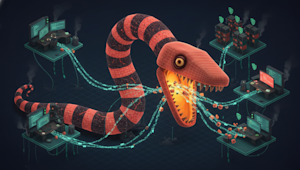
The Shai-Hulud worm, named for its destructive persistence, emerged from a sophisticated campaign beginning May 11. It infected popular packages like @tanstack/react-router (12.7 million weekly downloads) by chaining three vulnerabilities: a forked repo, a poisoned pull request, and exploited CI/CD pipelines. Each malicious version carried valid SLSA Build Level 3 provenance, proving that even robust supply chain controls can be bypassed. The worm targets credentials across AWS, SSH, npm, GitHub, HashiCorp Vault, Kubernetes, Docker, shell history, and cryptocurrency wallets. Uniquely, it now also harvests data from password managers like 1Password and Bitwarden, plus AI agent configurations (Claude, Kiro). This initial step is crucial: recognize that any system that imported these packages since May 11 is potentially compromised, even if the package was removed.
2. Identify All Compromised Systems Immediately
Conduct a thorough inventory of every development environment, CI runner, and production server that may have installed or imported any of the 172 known malicious packages from npm or PyPI. Use tools like Mend's tracking (maintaining a live list) or your own dependency scanning to identify exact package versions. Focus on @tanstack/* packages and other targeted names. Also scan for persistence artifacts: check for .claude/settings.json and .vscode/tasks.json with runOn: folderOpen triggers, and system daemons (macOS LaunchAgent, Linux systemd). The worm hides in the project tree, not node_modules, so standard package removal won't erase it. Document all affected machines and prioritize those with access to sensitive production systems.
3. Isolate Affected Machines—Do Not Revoke Credentials First
Before taking any remediation steps, physically or logically isolate each compromised system from the network. Disconnect them from the internet, internal services, and especially from secrets stores. Do not revoke tokens or rotate credentials while the machine is still connected. Analysis by Wiz found that the worm includes a destructive daemon that, upon token revocation, wipes the entire home directory. Instead, disconnect first. For CI runners, which expose /proc/pid/mem to extract even masked secrets, treat them as fully compromised. Use a clean environment to perform any credential rotation, and ensure the affected systems are air-gapped before any cleanup actions.
4. Remove All Persistence Mechanisms Thoroughly
Once isolated, manually remove the worm's persistence hooks. In each project directory, delete .vscode/tasks.json and .claude/settings.json (or revert them to safe versions). For system-level persistence, locate and disable any suspicious LaunchAgent (macOS) or systemd service (Linux). Search for processes accessing /proc/*/mem on Linux. The worm installs itself to re-execute every time a project is opened, and it survives reboots. After removal, perform a deep scan for any residual files, including hidden directories. Consider wiping and rebuilding the affected machines from a known good image if the worm's full reach is uncertain.
5. Rotate All Compromised Secrets After Isolation
After isolation is confirmed, begin rotating all credentials that were exposed. This includes AWS keys, SSH private keys, npm tokens, GitHub personal access tokens, HashiCorp Vault tokens, Kubernetes service accounts, Docker configs, and cryptocurrency wallet data. Also revoke and reissue tokens for password managers and AI agent configurations. Use a secure, uncompromised machine to perform these actions. Be thorough: the worm harvested from over 100 file paths, including shell history which may contain many secrets. Update any CI/CD pipeline secrets as well. After rotation, monitor for any anomalous activity that might indicate the attacker already used stolen credentials before isolation.
6. Strengthen Your Supply Chain Security Going Forward
Prevent future attacks by addressing the root cause. The TanStack attack exploited an orphaned commit technique, where a pull request from a forked repo with no branch association triggered a trusted publish workflow. Key fixes include: restrict OIDC scope to specific workflows and branches, not entire repositories; enforce branch protection rules on all repositories; require manual approval for pull request workflows with write permissions; and avoid using pull_request_target without careful scrutiny. Additionally, implement dependency pinning, use package lock files, and regularly audit your dependency tree. Provenance attestations alone are insufficient—scope and integrity of CI/CD pipelines are the real controls. Finally, educate your development team on these vectors and institute a zero-trust approach to open-source components.
By following these six steps, your organization can effectively contain the Shai-Hulud worm, remediate its damage, and build a stronger defense against future supply chain attacks. The threat landscape evolves constantly, but proactive security hygiene and a deep understanding of your build processes are your best allies. Stay vigilant, stay informed, and never assume your existing safeguards are enough.
Related Articles
- Why AI Agents Fail When They Act Confidently and Wrong: A Q&A on Intent-Based Chaos Testing
- Ford Surges Past Q1 Expectations on $1.3B Tariff Refund, Lifts Full-Year Outlook
- Understanding Nvidia's Role in the Shift to Accelerated Computing and AI Factories
- Oracle's AI Infrastructure Bet Heats Up: Google Cloud Deal and Data Center Buildout Drive Investor Optimism — But Execution Risks Remain
- Building a Shared Future: A Practical Guide to Guaranteed Minimum Income
- Mastering the CSS contrast() Filter: A Complete Guide
- FBI Alert: Cyber-Criminal Cartels Driving Record $725M Cargo Theft Surge in North America
- Apple Pursues Tariff Refunds and Pledges Reinvestment in Domestic Production