Vanadium Flow Battery Milestone: Europe’s Largest System Deployed in East Sussex
In a significant step for long-duration energy storage, London-listed Invinity Energy Systems has delivered 20.7 megawatt-hours (MWh) of vanadium flow batteries to the Copwood VFB Energy Hub in East Sussex. Once the facility begins commercial operation later in 2026, it will become Europe’s largest vanadium flow battery installation, marking a milestone for grid-scale renewable energy integration.
The Copwood VFB Energy Hub
The Copwood VFB Energy Hub is a dedicated site designed to showcase the capabilities of vanadium redox flow batteries (VRFBs). Located in East Sussex, the hub will host the 20.7 MWh system delivered by Invinity. The company’s technology uses vanadium electrolytes stored in external tanks, allowing the battery’s energy capacity to be scaled independently of its power output—a key advantage for applications requiring multiple hours of discharge.
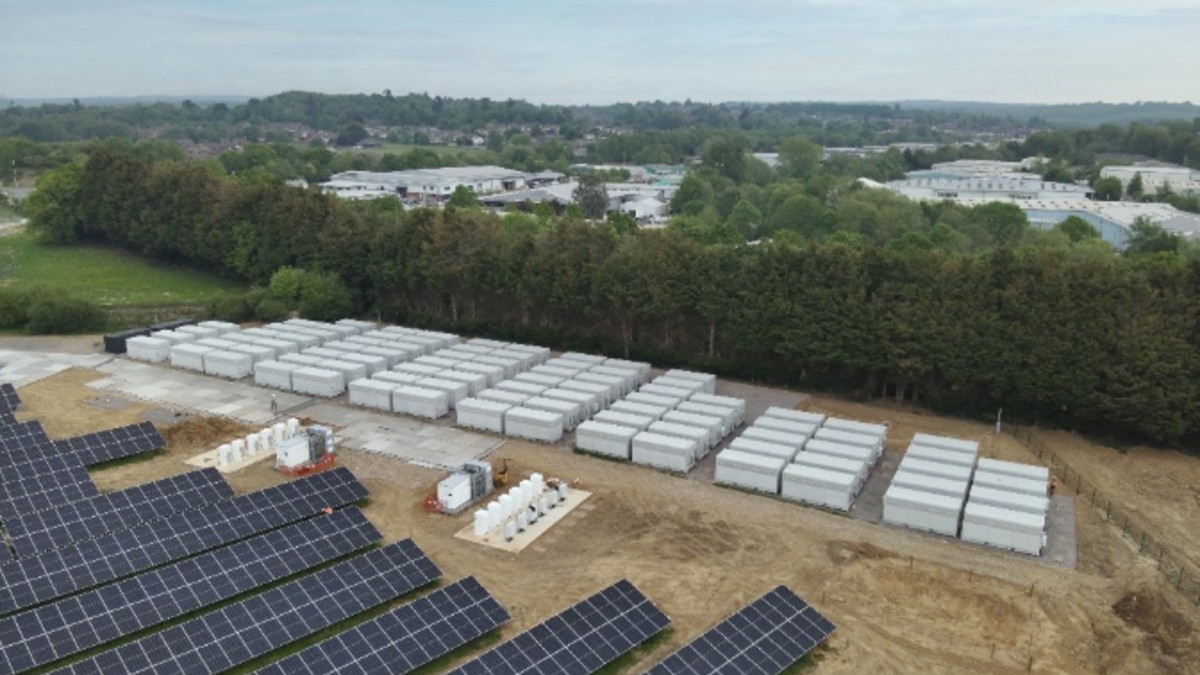
Invinity Energy Systems, which is publicly traded on the London Stock Exchange, has positioned itself as a leader in flow battery technology. The company notes that the Copwood project will not only be the largest of its kind in Europe but also a benchmark for future installations across the continent.
Why Vanadium Flow Batteries?
Vanadium flow batteries differ from traditional lithium-ion systems in several important ways. Instead of storing energy in solid electrodes, VRFBs use two liquid electrolytes (both containing vanadium in different oxidation states) separated by a membrane. Charging and discharging occur when the electrolytes flow through the cell stack, and the electrolytes themselves are stored in large tanks that can be expanded to increase energy capacity.
Key benefits include:
- Long duration – VRFBs are ideal for 4–12 hour discharge durations, making them suitable for smoothing intermittent renewable generation like solar and wind.
- Safety – The water-based electrolytes are non-flammable and non-explosive, reducing fire risk compared to lithium-ion batteries.
- Durability – Vanadium electrolytes do not degrade over charge/discharge cycles, giving VRFBs a lifespan of 20–30 years with minimal capacity fade.
- Recyclability – Vanadium can be recovered and reused at end of life, supporting circular economy principles.
Significance for the UK and Europe
The deployment of Europe’s largest vanadium flow battery system addresses a critical need for long-duration storage as renewables expand. The Copwood VFB Energy Hub will help balance the grid by absorbing excess solar and wind power during low demand and discharging it during peak hours. This reduces reliance on fossil-fuel peaker plants and supports the UK’s net-zero emissions target by 2050.

East Sussex, while not traditionally associated with large energy infrastructure, offers a suitable location due to grid connection availability and local support for clean energy projects. The hub is expected to provide ancillary services such as frequency regulation and voltage support, enhancing grid stability.
Technical Highlights
- Total capacity: 20.7 MWh
- Power rating: Not disclosed but typical VRFB ratios suggest 2–5 MW
- Expected operational date: Later in 2026
- Manufacturer: Invinity Energy Systems (London-listed)
Future Implications
The success of the Copwood project could accelerate adoption of vanadium flow batteries across Europe. Invinity already has projects in North America and Asia, but this installation will serve as a proof-of-concept for large-scale VRFB arrays in European climates. If the system performs as expected, utilities may increasingly turn to flow batteries for bulk storage, especially in regions where lithium-ion supply chains are constrained or where safety regulations are strict.
Long-duration energy storage is considered a cornerstone of decarbonization. The International Energy Agency (IEA) projects that global battery storage capacity must grow from around 200 GW in 2023 to over 1 TW by 2030 to meet net-zero scenarios. While lithium-ion dominates shorter durations, vanadium flow batteries are emerging as a competitive solution for 4–12 hour storage, particularly in applications where cycle life and safety are paramount.
Conclusion
Invinity Energy Systems’ delivery of 20.7 MWh of vanadium flow batteries to the Copwood VFB Energy Hub represents a tangible advance in Europe’s energy transition. Once commissioned, it will stand as the continent’s largest such installation—offering a glimpse of a future where renewable power is reliably available around the clock. For energy professionals and policymakers, the project underscores the growing maturity of flow battery technology and its role in building a resilient, low-carbon grid.
Related Articles
- NEVI EV Charger Rollout Gains Momentum in 2025 but Stalls on Federal Hurdles
- 7 Key Highlights from Flutter & Dart at Google Cloud Next 2026
- How to Analyze Apple’s Strategic Acquisitions Under Tim Cook: A Step-by-Step Guide
- How to Reduce Cow Methane Emissions by Leveraging a Newly Discovered Organelle
- Tesla's Robotaxi Fleet Shows First Real Signs of Life: 25 Vehicles Now Operating in Three Texas Cities
- Walmart and ABB Launch 400 kW Ultra-Fast EV Chargers: Phoenix First to Get 7 Stations in Nationwide Rollout
- XPENG's ARIDGE Division Demonstrates Modular Electric Land Aircraft Carrier in Historic Flight Test
- EV Battery Supply Chain Surges Despite Federal Policy Reversal