7 Essential Insights on SPIFFE for Securing Agentic AI and Non-Human Identities
As artificial intelligence evolves into autonomous, decision-making agents, a pressing question emerges: how do we verify the identity of these non-human entities? Traditional identity systems, designed for people and static credentials, crumble under the demands of dynamic, ephemeral AI workloads. Enter SPIFFE (Secure Production Identity Framework For Everyone), an open standard that brings battle-tested identity management to the cloud-native world. In this listicle, we explore seven crucial aspects of SPIFFE and its pivotal role in securing agentic AI and other non-human actors.
1. What Exactly Is SPIFFE?
At its core, SPIFFE is an open-source standard for issuing cryptographic identities to software workloads. Originally crafted to help microservices authenticate in containerized environments, it provides a universal way to assign a unique SPIFFE ID to every service, process, or agent—without relying on long-lived secrets like API keys or passwords. The framework enables three key capabilities: workload identity (each entity gets a verifiable ID), federated trust (identities work across organizations), and dynamic credentialing (automatic rotation reduces leakage risk). By decoupling identity from infrastructure, SPIFFE lays a foundation that scales from simple microservices to complex AI ecosystems.
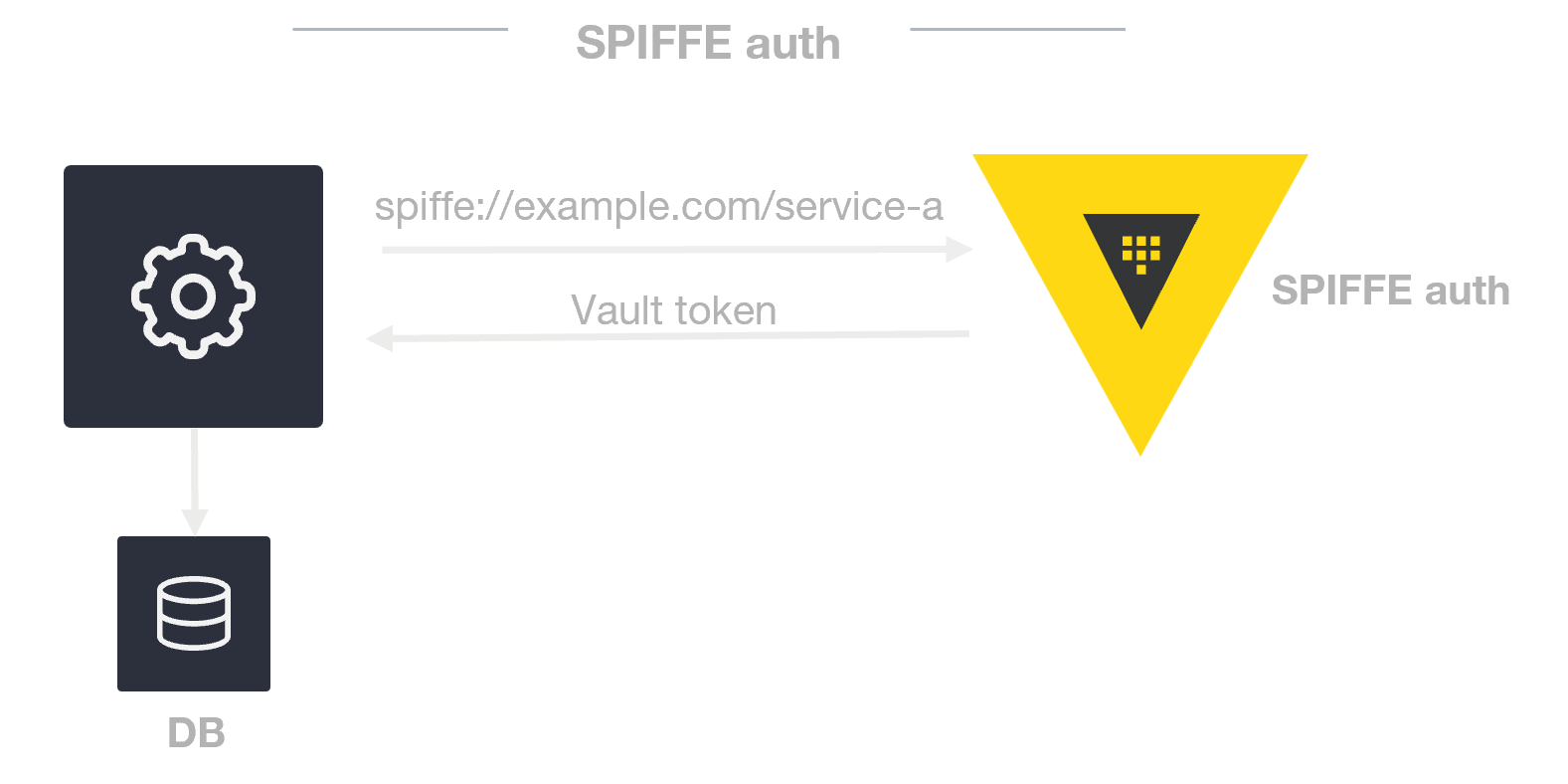
2. Why Agentic AI Demands a New Identity Approach
Agentic AI systems—whether LLM-powered bots, autonomous drones, or robotic process automation—operate with minimal human oversight. They make decisions, negotiate with other agents, and handle sensitive data across networks. These entities need to prove who they are, establish trust in multi-agent settings, and communicate securely across organizational boundaries. Traditional identity frameworks, built for human users with static credentials, fail here. SPIFFE steps in with a paradigm shift: it ties identity to the workload itself, not to a person or a piece of paper. This makes it a natural fit for non-human actors that must authenticate fast, frequently, and without human intervention.
3. Verifiable Non-Human Identity Through SPIFFE IDs
Each AI agent or robotic system can receive a unique, cryptographically verifiable SPIFFE ID that encodes its origin, role, and trust level. This ID is embedded in a short-lived X.509 certificate (or JWT token) that the workload uses to prove its identity to peers. For example, an autonomous vehicle can present its SPIFFE ID to a traffic management system, proving it has the authority to request a green light. Because the ID is bound to the process rather than a static credential, it survives restarts, scaling events, and migrations. This approach eliminates the need for shared secrets—a major vulnerability in conventional systems—and ensures that every non-human actor has a tamper-proof identity from the moment it spins up.
4. Zero Trust Architecture with Mutual TLS
In a zero-trust model, no entity is trusted by default, and every interaction must be authenticated. SPIFFE supports this by enabling mutual TLS (mTLS) between agents. When two AI agents connect, they exchange SPIFFE-issued certificates, each validating the other’s identity before any data flows. This encryption-and-authentication handshake prevents impersonation, replay attacks, and unauthorized access. For agentic systems that operate in hostile or multi-tenant environments—like a smart factory with subcontractor robots—mTLS ensures that only authorized agents can issue commands or access sensitive logs. SPIFFE’s built-in certificate management automates this process, so developers don’t have to manually configure trust stores.
5. Federation Across Trust Domains
Agentic AI rarely stays within a single cloud or organization. A delivery drone might need to coordinate with a warehouse robot from another company, or a healthcare AI might consult a specialist agent in a different hospital network. SPIFFE’s federation model allows identities to be validated across different trust domains without a central authority. By establishing a chain of trust between SPIFFE authorities (e.g., using a bundle of root CAs), agents from Domain A can authenticate agents from Domain B. This cross-domain capability is essential for collaborative AI ecosystems, such as supply chain automation or disaster response, where multiple organizations must trust each other’s digital actors securely and at scale.
6. Dynamic Identity Lifecycle for Ephemeral Workloads
AI agents are often ephemeral: they spin up, complete a task, and disappear within minutes or seconds. SPIFFE embraces this transience with dynamic credentialing and automatic rotation. Identities are issued with short lifetimes (e.g., minutes) and refreshed automatically by the SPIFFE workload API. When an agent is decommissioned, its credentials expire immediately, minimizing the blast radius of any potential compromise. This lifecycle management also reduces operational overhead—no more rotating API keys or updating secrets managers. For agentic systems that scale up and down rapidly, such as a cloud-based swarm of data-analysis bots, SPIFFE ensures that identity management keeps pace without manual intervention.
7. Real-World Use Case: Multi-Agent Smart City Infrastructure
Imagine a smart city where AI agents coordinate traffic lights, energy grids, and emergency response. A swarm of agents—each responsible for a different domain—needs to authenticate each other, prove authority to issue commands, and secure communication channels. Using SPIFFE, every agent gets a unique ID tied to its role (e.g., “traffic-agent-eastside”). When a fire-department agent requests priority routes, it presents its SPIFFE ID, and the traffic agent validates it via mTLS. Federation allows the city’s agents to trust agents from neighboring municipalities. Dynamic credentialing ensures that a compromised agent’s identity is revoked quickly, preventing chaos. This scenario shows how SPIFFE provides the identity backbone for safe, autonomous cooperation in critical infrastructure.
As agentic AI continues to integrate into every facet of technology, identity will underpin trust, security, and interoperability. SPIFFE offers a mature, open standard that evolves with the dynamic nature of non-human actors. By embracing workload identity, zero trust, federation, and ephemeral credentials, organizations can build AI systems that are not only powerful but also trustworthy. Whether you’re deploying a simple chatbot or a fleet of autonomous drones, understanding SPIFFE is a key step toward securing the future of autonomous intelligence.
Related Articles
- Understanding Transistor Matching: Why and How
- Linux Lunar Lake CPU Performance Surges Over Past Year, New Benchmarks Confirm
- NVIDIA and Ineffable Intelligence Join Forces to Revolutionize Reinforcement Learning Infrastructure
- How to Identify a Quantum Computing Stock Poised for a 20% Gain by 2026: A Step-by-Step Guide
- SPIFFE Emerges as Critical Standard for Verifying Autonomous AI Identities
- Exploiting Rowhammer on Nvidia GPUs: A Step-by-Step Attack Methodology
- The MacBook Pro Upgrade I'm Actually Looking Forward To (It's Not OLED)
- Apple Discontinues Entry-Level Mac Mini: Base Storage Doubles, Price Hikes to $799