Netherlands Launches Government-Controlled Forgejo Platform for Open Source Code Hosting
Introduction: A Sovereign Move in Code Hosting
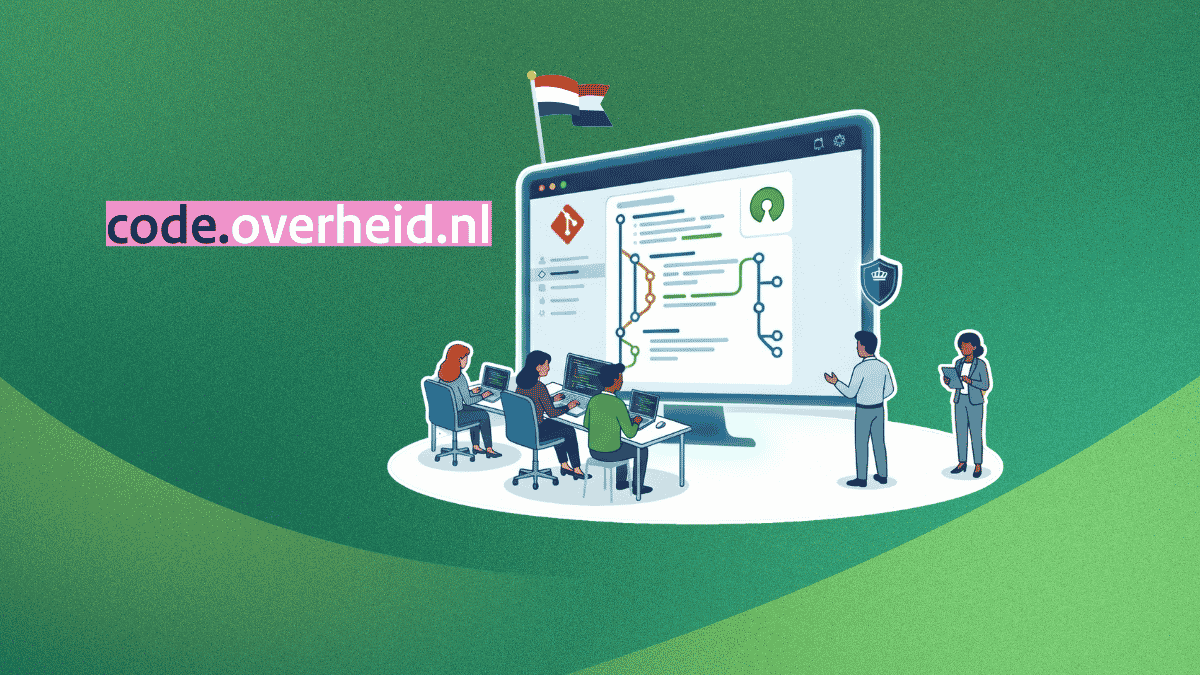
In a deliberate shift away from proprietary and vendor-dependent platforms, the Dutch government has quietly launched its own self-hosted Git forge, code.overheid.nl, built on the fully open-source Forgejo software. The initiative, which began as an internal evaluation and evolved into a live pilot, represents a strategic effort to regain full control over government source code while fostering collaboration across public agencies. The move was formalized with a soft launch on April 24, 2026, after months of planning and technical assessment.
Background: Why the Dutch Government Needed Its Own Forge
The journey began in November 2025, when Jan Vlug, a software engineer writing for the Dutch government's developer portal, published a detailed blog post recommending a suitable Git forge for governmental source code hosting. His post arrived just as the Ministry of the Interior and Kingdom Relations (BZK) was setting up a dedicated Git instance — and the platform choice was still wide open. At the time, the government's code was scattered across GitHub and GitLab, neither of which operated under government oversight.
Why GitHub and GitLab Were Ruled Out
GitHub was quickly eliminated because it is proprietary software, directly conflicting with the Dutch government's policy of preferring open source when equally suitable alternatives exist. GitLab advanced further in the evaluation but ultimately failed due to its open-core model: while the Community Edition is genuinely free software, the Enterprise Edition is proprietary, creating unacceptable vendor lock-in and licensing complexity.
The Solution: Forgejo — Fully Free and Community-Governed
After careful comparison, Forgejo emerged as the clear winner. It is fully free and open-source software, licensed under GPLv3+, and governed by Codeberg e.V., a democratic nonprofit organization. Unlike many competitors, Forgejo has no enterprise tier, no proprietary upsells, and zero vendor lock-in. This aligns perfectly with the government's open-source-first policy and its desire for long-term sovereignty over its digital infrastructure.
Live Pilot: code.overheid.nl Goes Soft
On April 24, 2026, the platform code.overheid.nl was quietly soft-launched. Tom Ootes, a developer advocate at the Dutch government, announced the milestone on the developer portal, framing it as "a collective project to build something together" rather than shipping a finished product. The platform is a self-hosted Forgejo instance, running on Dutch government infrastructure managed by SSC-ICT (DAWO). It is entirely free for all government organizations.
Core Objectives of the Platform
The initiative revolves around three key goals:
- Open source development with proper Git tooling, including pull requests, issue tracking, and code reviews.
- Government-wide collaboration to reduce duplicate development across agencies.
- Sovereignty through full control over the hosting environment.
What's Already on the Platform?
Despite its pilot status, the forge already hosts several meaningful repositories. The most notable presence is Kiesraad, the Dutch Electoral Council, which has uploaded election-related code including Abacus (the software used for vote counting and seat distribution) and e-KS (an electronic candidate nomination system).

The Ministry of the Interior has contributed the DAWO project (their digital autonomous workplace initiative) and a DigiD source code release published under a freedom of information ruling. Other government bodies that have already joined as organizations include multiple national ministries: Finance, Foreign Affairs, Agriculture, and Interior, along with several major municipalities.
Gradual Rollout and Developer-Led Growth
The rollout is deliberately gradual. Not every government organization can sign up yet; the idea is to build the platform alongside the developers who will actually use it. Early participants are strongly encouraged to file issues and open pull requests on the platform itself, treating the forge as both a tool and a collaborative project in its own right. This iterative, developer-driven approach ensures the platform meets real-world needs before scaling up.
Conclusion: A Model for Digital Sovereignty
By choosing Forgejo and self-hosting on government infrastructure, the Netherlands is setting a powerful example for how public administrations can reclaim control over their digital assets. The move not only avoids proprietary dependencies but also fosters a culture of open collaboration and transparency across agencies. As the pilot expands, code.overheid.nl may well become a blueprint for other countries seeking to build their own sovereign Git forges.
Related Articles
- Understanding WebAssembly JSPI: Origin Trial and What It Means for Developers
- Python’s Packaging Community Establishes Formal Governance Council
- Mastering Java Algorithms: A Comprehensive Guide to Core Techniques
- Python 3.14 Release Candidate 1: What You Need to Know
- 7 Must-Know Facts About GDB Source-Tracking Breakpoints
- Building and Testing dav2d: VideoLAN's Open-Source AV2 Decoder
- Microsoft Opens DOS Vault: Earliest Source Code Released for 45th Anniversary
- Exploring Jakarta EE: Core Concepts and Practical Insights